

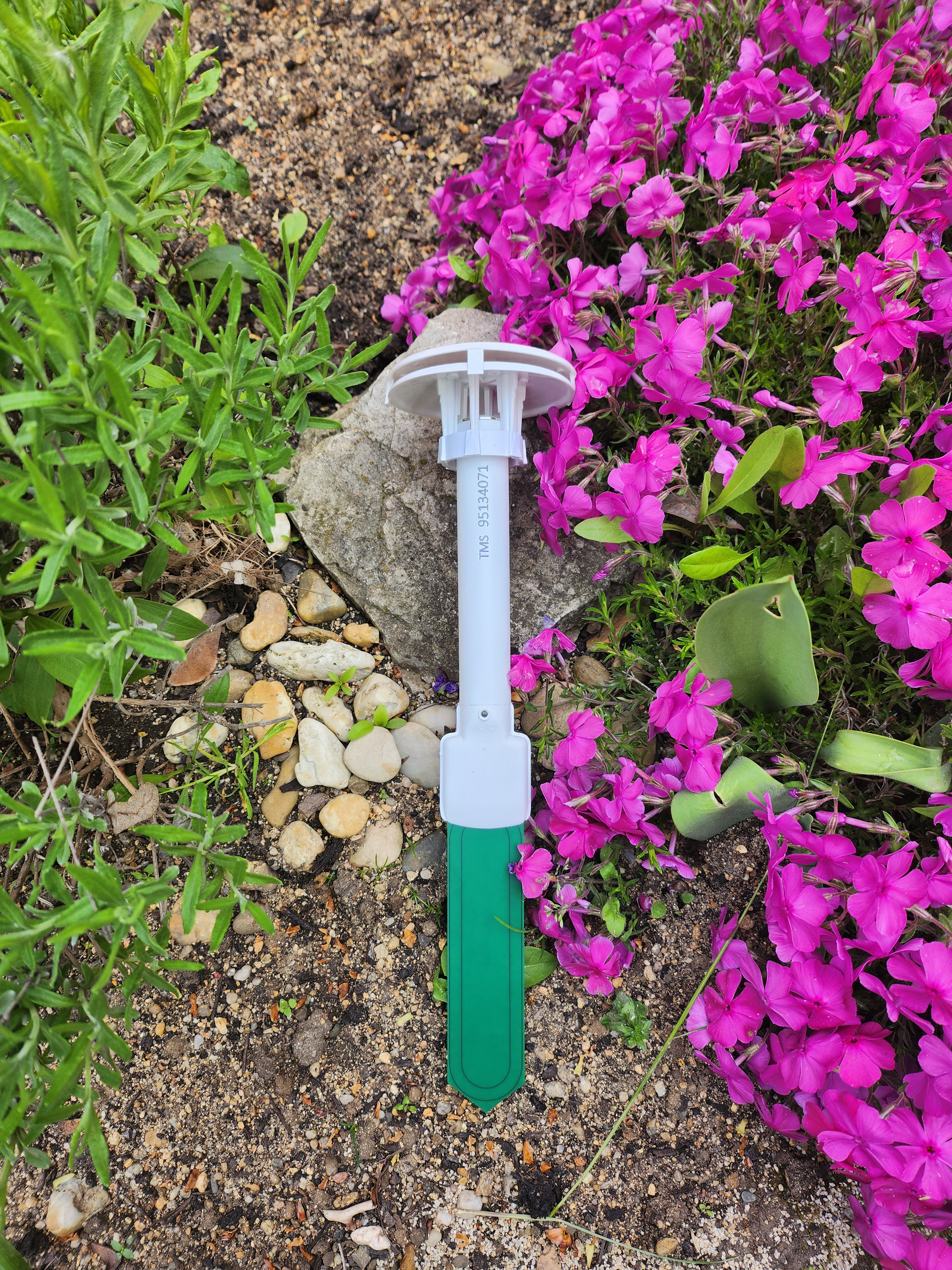
TMS Datalogger
TMS dataloggers provide an accurate and cost-effective way to measure air temperature, soil temperature, and soil moisture in long-term field deployments. Each unit contains three temperature sensors and one soil moisture sensor, allowing microclimate measurements close to the ground surface.
With a high-capacity lithium battery (approx. 10 years) and large internal memory (524 288 records), TMS loggers operate fully autonomously and require minimal maintenance. Their robust construction and low price make them ideal for long-term monitoring across large areas, even in harsh environments.
A peer-reviewed description of TMS dataloggers has been published in Agricultural and Forest Meteorology. Read the article.
Technical specification (TMS Standard / base unit)
- Length
- 29 cm
- Weight
- 108 g
- Memory
- 524 288 events (~14 years at 15-minute intervals)
- Battery
- Lithium 2600 mAh (~10 years)
- Connector
- Touch probe for settings and data download to PC via TMD Adapter
- Software
- Data download and configuration using Lolly
- Temperature sensors
- 3 x MAXIM/DALLAS DS7505U+
- Resolution
- 0.0625 °C
- Accuracy
- ± 0.5 °C
- Measurement range
- -40 to +60 °C (can measure -60 to +85 °C; may reduce battery life)
- Moisture sensor
- 1 x soil moisture sensor
Available TMS variants
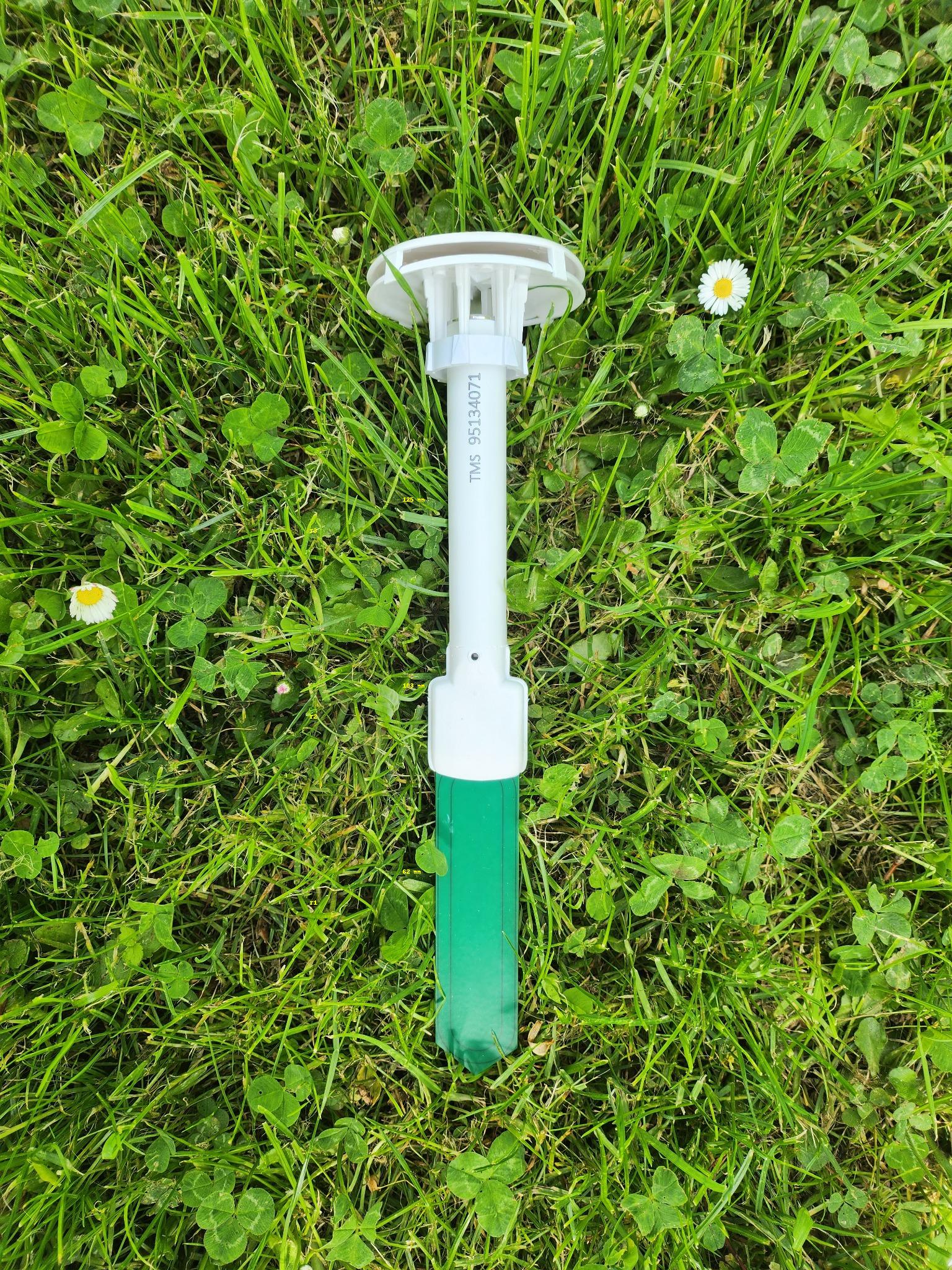
TMS Standard
- -6 cm
- +2 cm
- +15 cm
TMS Extreme
- Battery: 3500 mAh (~30% increase vs Standard)
- Higher capacity memory
- Expected lifetime: approx. 14 years
- Wider temperature range of measurement
- Glass-epoxy filled to the top for better resistance (e.g., wild boar chewing)
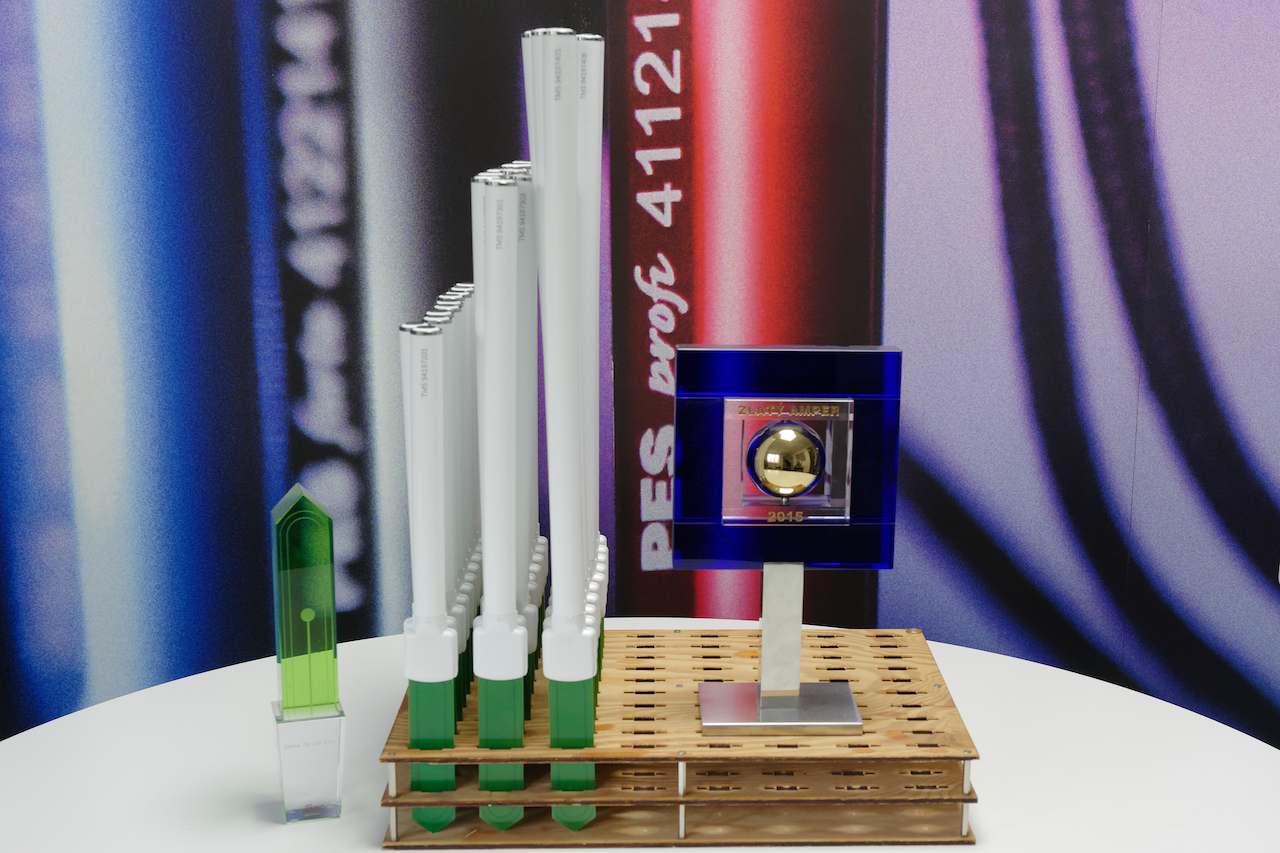
TMS Long
- 20 cm
- 30 cm
- 45 cm
- 60 cm
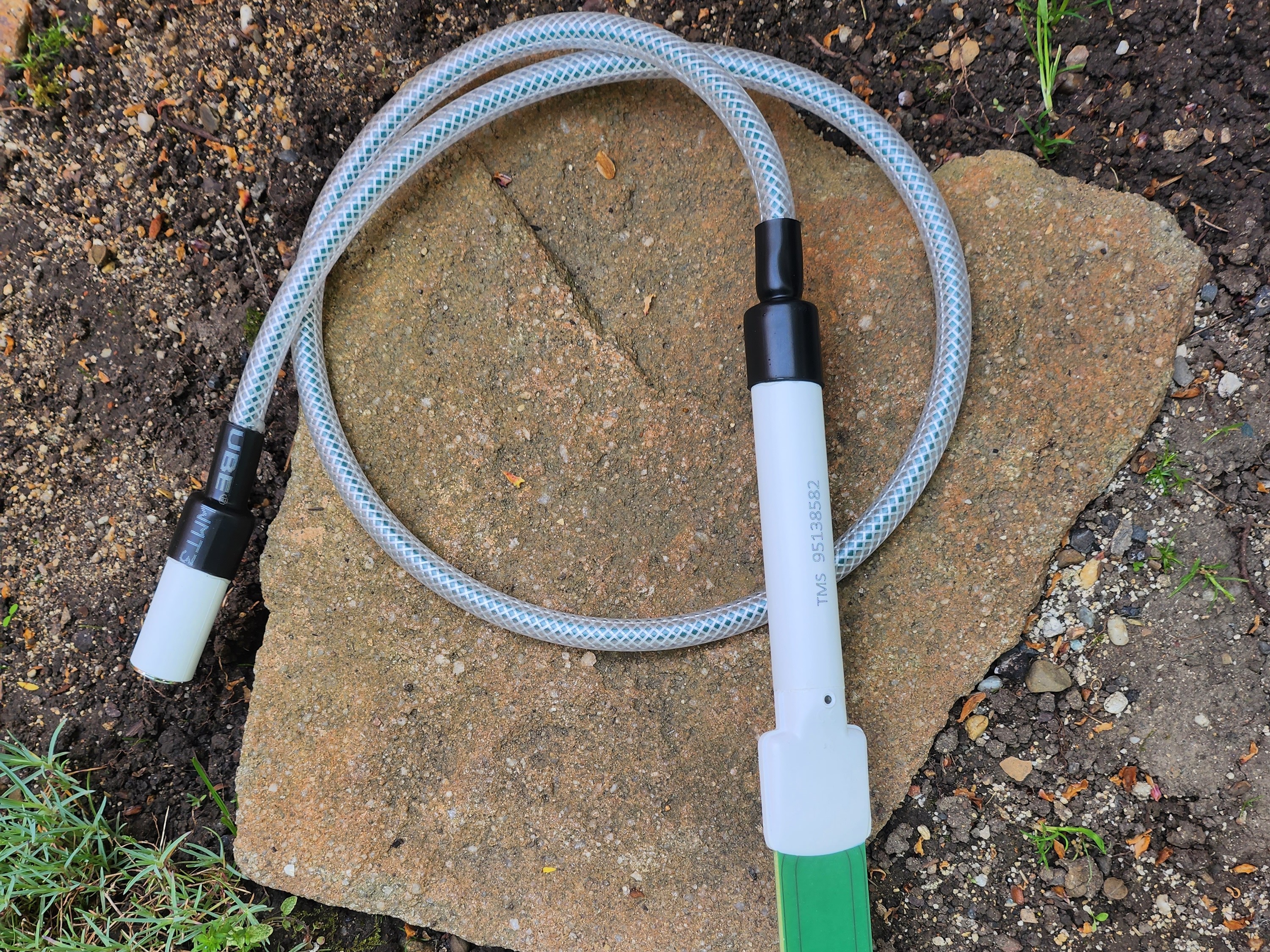
TMS Buriable
- 0.5 m
- 1 m
- 2 m
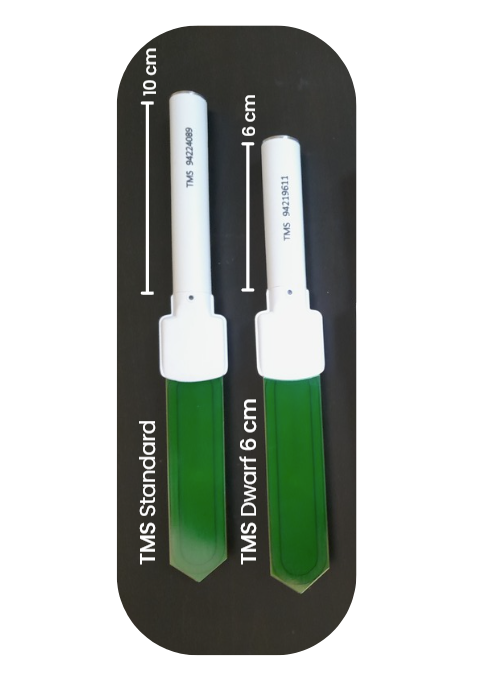
TMS Dwarf
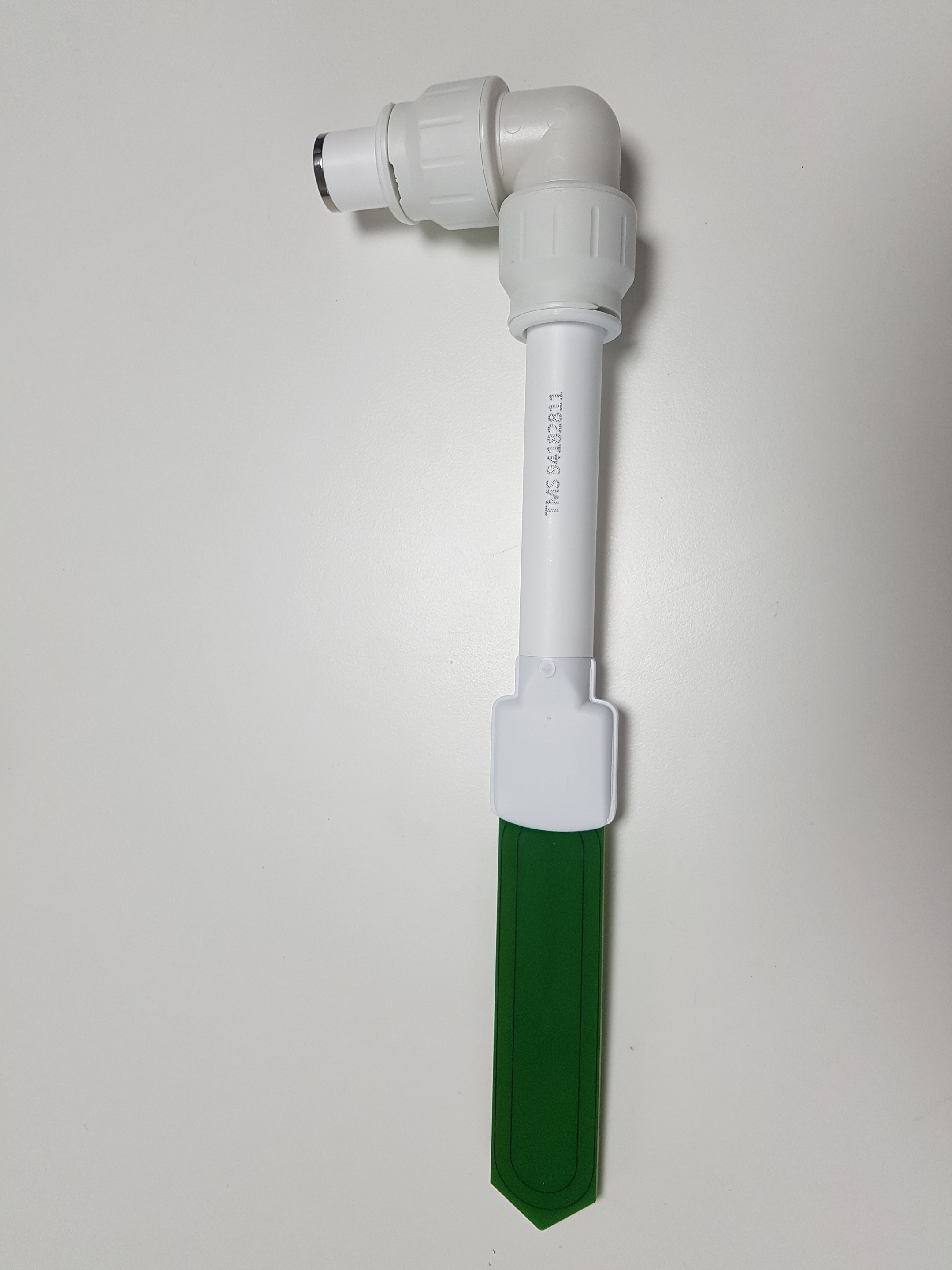
TMS Bend
Why choose TMS dataloggers?
- Measures air + soil temperature and soil moisture in one compact device.
- Mimics an herbaceous plant (approx. 15 cm above and 10 cm below surface) for ground-level microclimate monitoring.
- Minimal maintenance thanks to long battery life and large memory.
- Suitable for harsh environments - tested from African rainforests to cold deserts in the Himalayas.
- Fast, simple downloads with the TMD Adapter and Lolly (approx. 3 seconds to extract one month of data at 15-minute interval).
- Standardized sensor placement allows strong comparability across deployments.
- Described in a peer-reviewed scientific publication: Agricultural and Forest Meteorology.
Installation tips
To measure properly, ensure the entire belowground (green) section is in good contact with the soil. In some soils, air pockets can form and reduce accuracy. Drying soils (e.g., clay) can shrink or swell, reducing contact and causing soil moisture values to appear lower.
Adjust installation to your soil type: in rocky soils, forcing the logger into the ground can damage sensors. Create a pilot hole first using a metal plate or the TMS Installation Tool, then insert the logger. If using a larger hole, cover it carefully with soil - this may slightly alter soil composition.
Frozen soil note
Do not use soil moisture data from periods when the soil is frozen. Frozen periods can be identified from the temperature sensor data.
Protection from wild animals
Most damage occurs when wild animals manipulate the devices. We recommend protecting the TMS with wire cages to prevent movement or damage (e.g., deer, wild boar, bears).
Reference (citation)
Wild J., Kopecky M., Macek M., Sanda M., Jankovec J., and Haase T. (2019) Climate at ecologically relevant scales: A new temperature and soil moisture logger for long-term microclimate measurement. Agricultural and Forest Meteorology, 268, 40-47. https://www.sciencedirect.com/science/article/abs/pii/S0168192318304118